
¿Para qué usamos los satélites? La mayoría de la gente piensa que es para observar el clima y comunicarnos por todo el planeta pero... ¿podrían utilizarse para detectar excrementos de pingüino? Suena a chiste, pero eso es exactamente lo que los científicos han estado haciendo.

Emperor penguins are only found in Antarctica. They are vulnerable to climate change, as warming ocean waters melt the sea ice where they live and breed. So, it is important that we can track how many groups of penguins – called colonies – there are. This is difficult, as the areas in which they live are remote, and temperatures dip to a bitterly cold –50°C, making it hard for scientists to visit. Could finding them from space be the answer?
Individual penguins are too small to show up in satellite images, but photos taken by Sentinel-2A and 2B, which are orbiting Earth, have revealed large brown patches of ice in areas around Antarctica. Scientists realised that this is where the ice has been stained by penguin poo (the official name of which is guano)!

Muchas de estas zonas marrones corresponden a colonias que ya conocíamos, pero esta nueva forma de detección ha revelado que hay ¡11 colonias nuevas! Ahora sabemos que hay 61 colonias de pingüinos en toda la Antártida. Estas nuevas colonias elevan la cifra conocida de pingüinos emperador a algo más de medio millón, lo que aumenta el total en un 10 % aproximadamente.
Aunque es un descubrimiento fantástico, no todo son buenas noticias. Estos pingüinos viven en zonas que pueden verse afectadas por el cambio climático, lo que significa que tenemos que vigilarlos con atención y hacer lo que podamos para protegerlos. Los satélites Sentinel-2A y 2B son perfectos para este trabajo, ya que su misión es vigilar la salud y el comportamiento de nuestro planeta, y observar cómo le está afectando el cambio del clima.
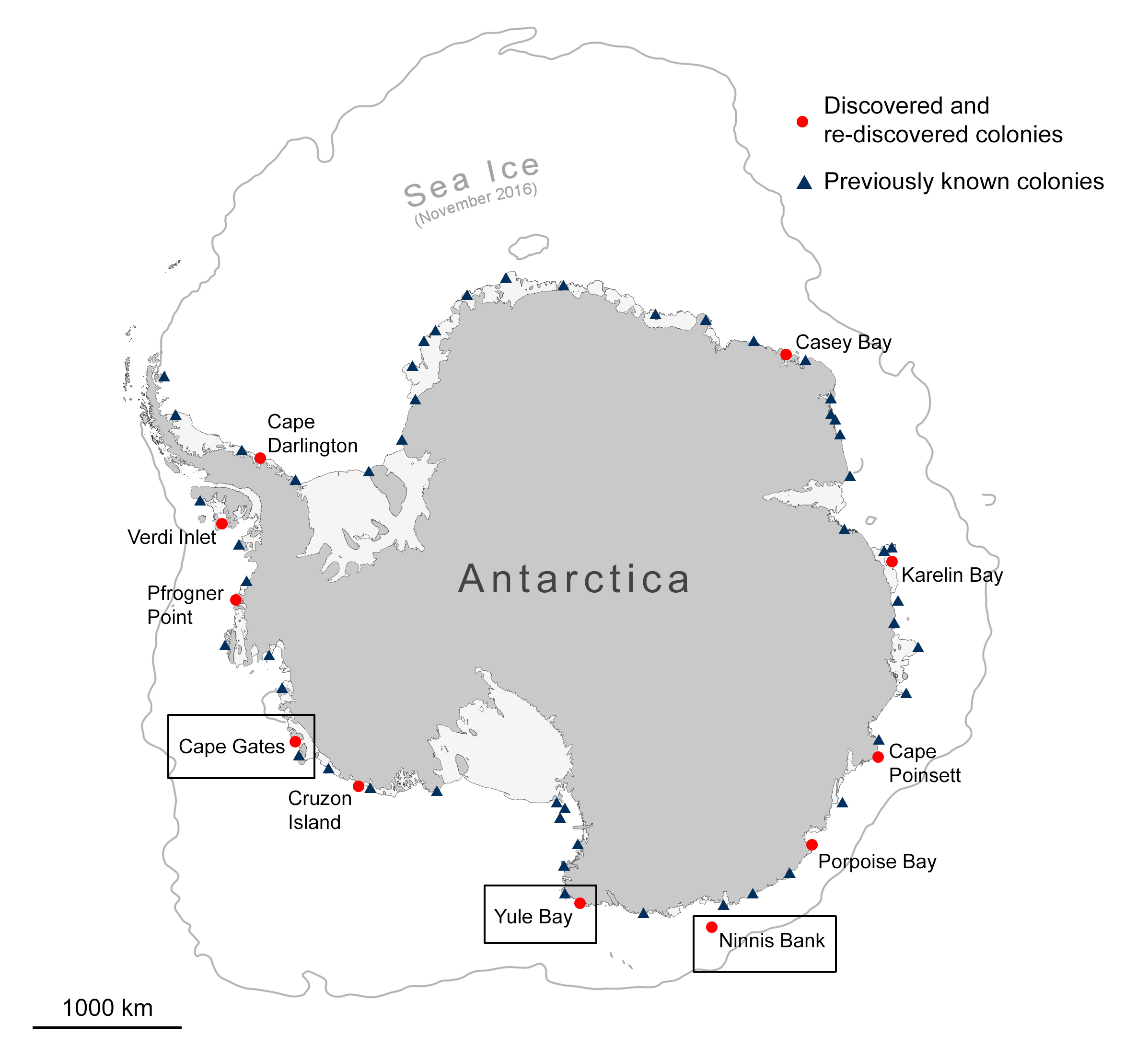
Cool fact: Scientists were surprised to find that some of the new colonies live on sea ice formed around icebergs grounded in shallow water – behaviour not seen before in Emperor penguins!


