
Wofür werden Satelliten alles eingesetzt? Die meisten denken bei dieser Frage wohl an Wetterbeobachtungen und weltweite Kommunikationsnetze, nur sicher nicht an eines: das Aufspüren von Pinguinkot. Was sich wie ein Scherz anhört, ist tatsächlich ernsthafte Wissenschaft.

Emperor penguins are only found in Antarctica. They are vulnerable to climate change, as warming ocean waters melt the sea ice where they live and breed. So, it is important that we can track how many groups of penguins – called colonies – there are. This is difficult, as the areas in which they live are remote, and temperatures dip to a bitterly cold –50°C, making it hard for scientists to visit. Could finding them from space be the answer?
Individual penguins are too small to show up in satellite images, but photos taken by Sentinel-2A and 2B, which are orbiting Earth, have revealed large brown patches of ice in areas around Antarctica. Scientists realised that this is where the ice has been stained by penguin poo (the official name of which is guano)!

Viele dieser braunen Verfärbungen befinden sich an Stellen, an denen bekannte Pinguinkolonien leben, doch aus dem All ließen sich zusätzlich elf weitere Kolonien entdecken. Insgesamt kennen wir nun 61 solcher Pinguinbrutgebiete in der Antarktis. Die neu entdeckten Kolonien mit einberechnet, dürfte es über eine halbe Million Kaiserpinguine geben – bis zu 10 % mehr als bisher gedacht.
So faszinierend diese Entdeckung auch sein mag, heißt sie leider nicht nur Gutes. Die Pinguine leben in Gegenden, die sehr wahrscheinlich vom Klimawandel beeinflusst werden. Daher ist es unsere Aufgabe, die Tiere zu beobachten und alles zu tun, um sie zu schützen. Sentinel-2A und -2B sind für diese Aufgabe wie geschaffen, denn ihre Mission besteht darin, den Zustand und das Verhalten unseres Planeten im Blick zu behalten – einschließlich der ständigen Veränderungen durch den Klimawandel.
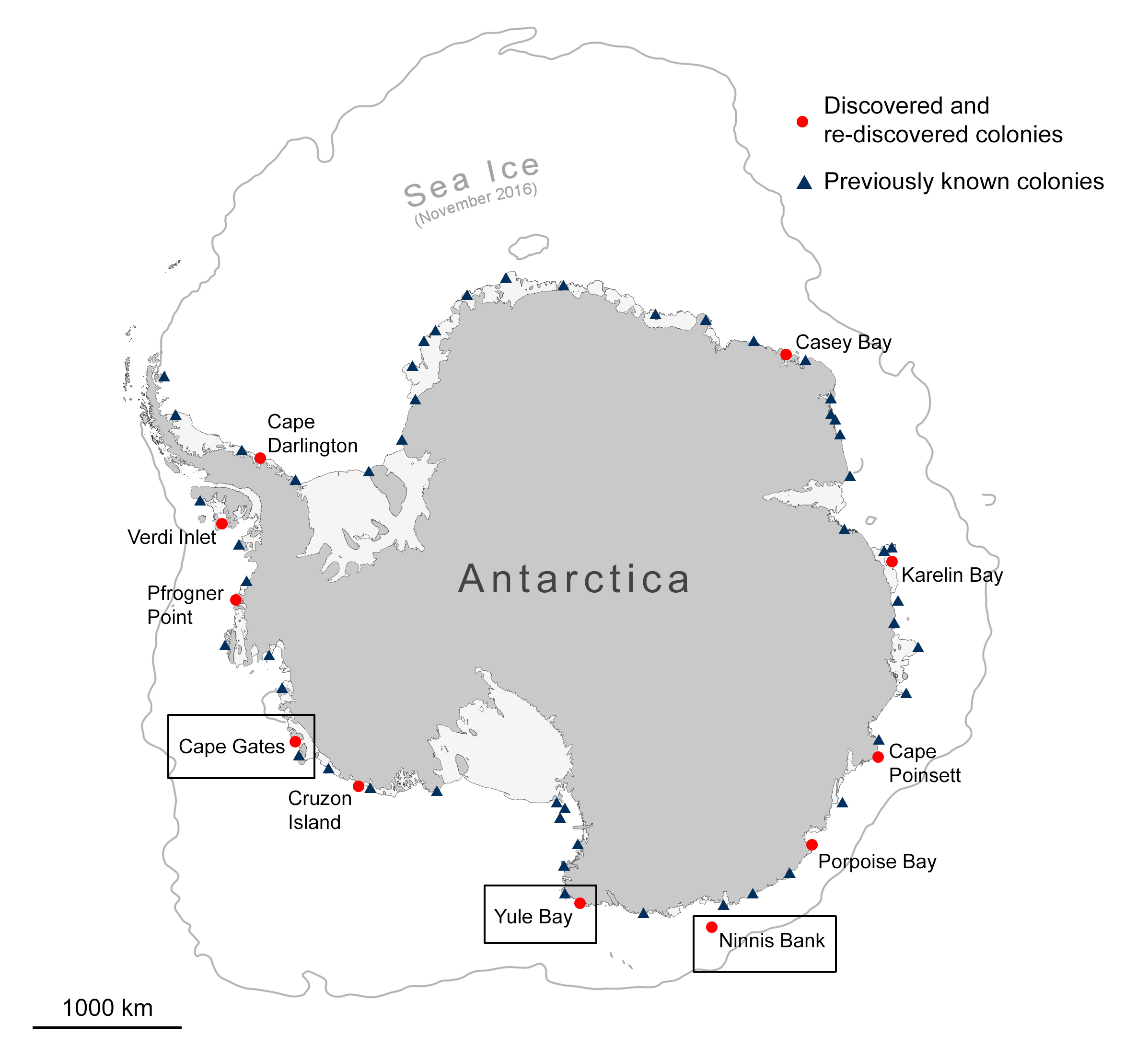
Cool fact: Scientists were surprised to find that some of the new colonies live on sea ice formed around icebergs grounded in shallow water – behaviour not seen before in Emperor penguins!


