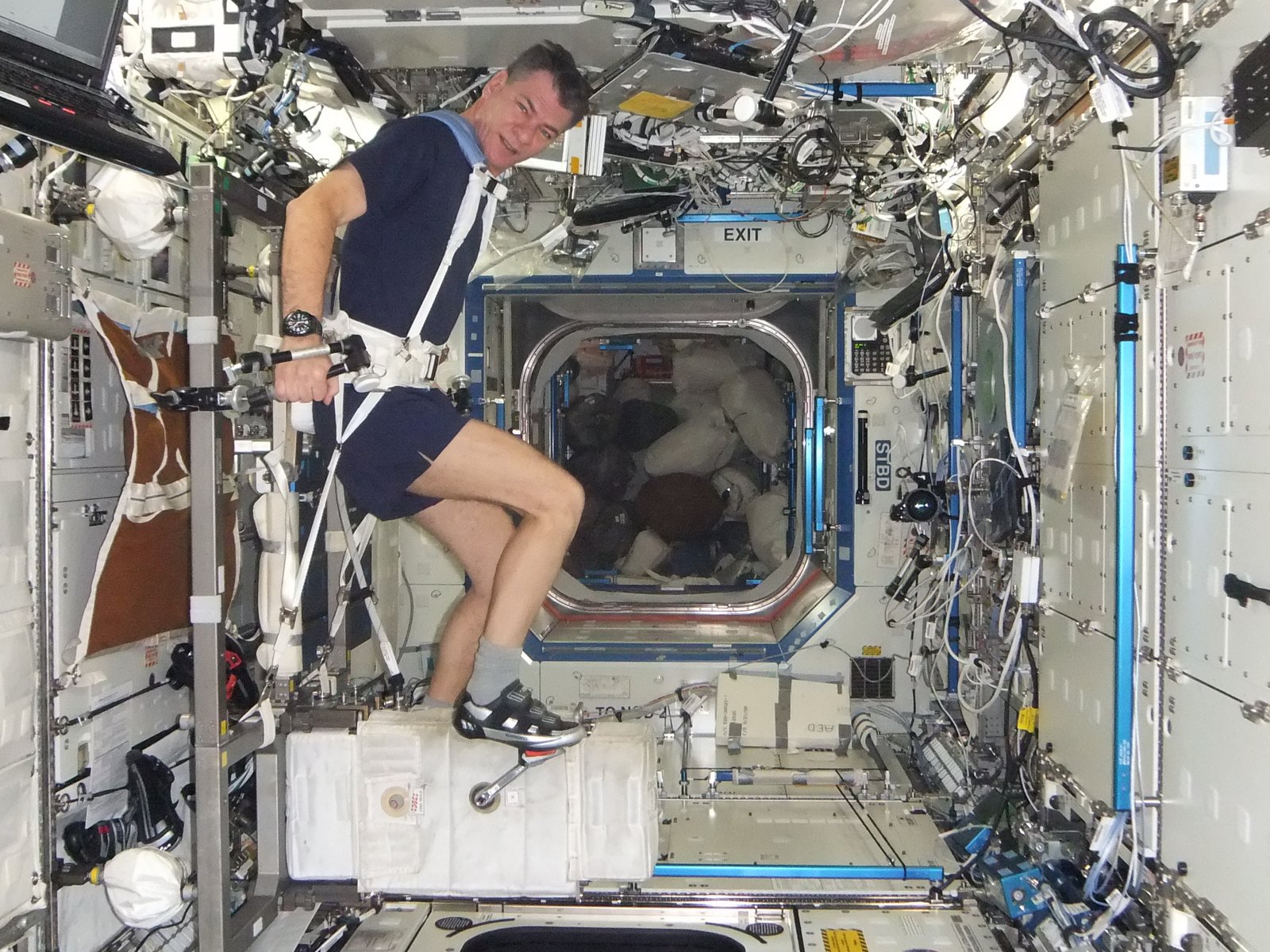
A key part of an astronaut’s job is to study how things work without gravity. For over 20 years, astronauts on the International Space Station (ISS) have made amazing discoveries to help us understand science and life on both Earth and Space.
“We are up here in space because we want to do a lot of experiments, zero g experiments, there is a lot of stuff in physics, chemistry, medicine, that we can learn from being here in weightlessness and doing this research.” said ESA astronaut and scientist, Matthias Maurer “everyone around the world can propose science objectives for this Station… if we work together, we can achieve so much.”.
Uno de los objetos de estudio más interesantes es la adaptación de nuestro cuerpo a un extraño mundo de ingravidez. Esto no sólo mejora nuestro conocimiento de la biología humana, sino que también es clave para la exploración futura de la Luna o de Marte.
Scientists want to know about every part of the crew’s health. People keep track of what food they eat and how their diet affects them. That means taking samples of blood, urine and pieces of hair, storing them in a freezer and sending them back to Earth to be studied. Two special watches worn by the astronauts track their movement. Different body scans are also part of their daily timetable.
These studies can directly help people on Earth, as well as astronauts on long space missions. They bring hope to people who suffer from weakened bones, heart and lung diseases, and age-related problems.
One of these projects, the Orbital Architecture Study, is investigating how the design of the Space Station can affect how astronauts think and feel. This can help us find out how to help people feel calmer and more focused in places in space and on Earth.


